Horizon Paris: the night real estate entered the agentic era
DoorFeed launched its agentic platform for institutional real estate in Paris. Investors, developers, and brokers were in the room to say what that actually changes.

Published
Author

DoorFeed
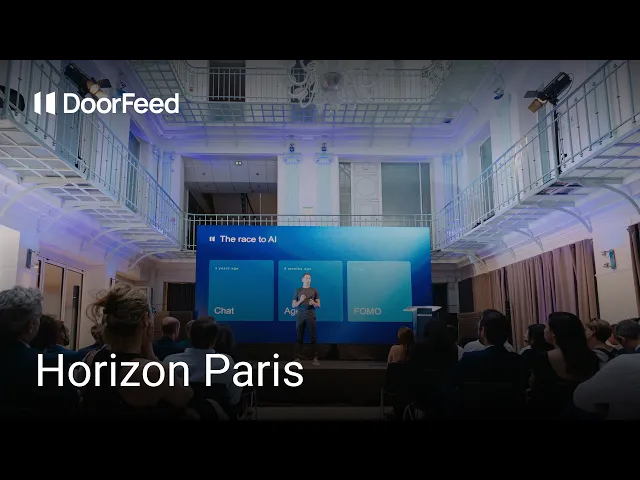
On 15 September, in Paris, DoorFeed marked the start of the agentic era of real estate. At Horizon, an event at Espace Cléry, the company launched an AI platform that does the analytical work institutional teams have always done by hand, and set out where it goes next.
Espace Cléry was a fitting setting for an industry in the middle of its most significant shift in decades. In one room, investors, developers, and brokers came together around three questions. What does AI in real estate actually look like in practice? Who gains from it, and who is positioned to act first? And what does it mean for work built on judgment and trust to take on tools that can now do the analysis themselves?
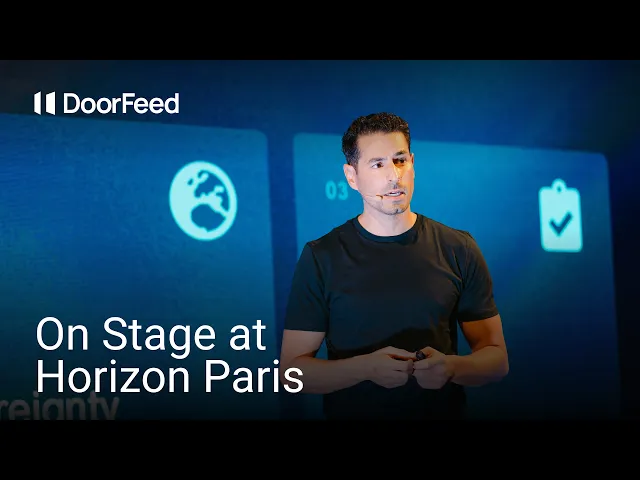
James Kirimy, DoorFeed's founder and CEO, opened the evening.
This is a pretty important moment for us, it's the launch of the DoorFeed platform, completely AI, fully agentic and we'll get into all of that over the course of the evening.
The announcements
That night on stage, DoorFeed launched its platform, announced a new global data agreement that takes it beyond the UK and France, and set out an expansion from residential into commercial property.
The platform
For decades, the analysis has run on spreadsheets, with every comp set, valuation and model built by hand. DoorFeed's agents carry out the analysis themselves instead. They produce the comparables, the valuations, the cash flow models, and the market reports from live data. Every figure traces back to the source it came from. The team keeps the decision, and the platform builds the business plan and memo it rests on.
The agentic shift in real estate
The platform works through the whole task the way an analyst would and hands back exactly what the team needs to act on it. It takes the developer minutes to turn an appraisal around. An investor's model comes built to their own methodology, and exports straight to Excel where it stays fully editable. For a broker, the pitch and the valuation are ready before the meeting starts, turning hours of unpaid prep into time spent on the relationships that actually win mandates.
The reach
DoorFeed also set out how far the platform now reaches. A new global data agreement extends its coverage beyond the UK and France into new markets, and the product now runs on commercial property alongside the residential work it started with.
As James put it from the stage:
"No more geographic borders, no more asset-class borders and no more barriers to accessing this information, this data, and the power of AI.”
Another announcement covered the security architecture behind the expansion. DoorFeed has signed partnerships with Anthropic and OpenAI that guarantee, in his words, "a level of security that today is without parallel," covering zero data retention, full data sovereignty within Europe, and a complete GDPR audit trail.
The conversation
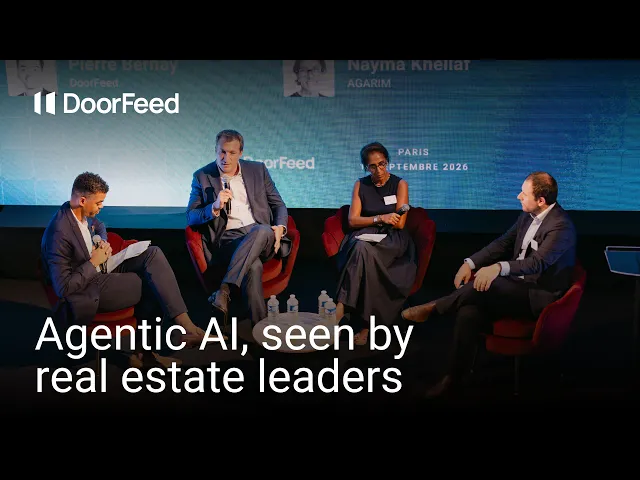
James introduced the discussion by naming the problem the industry has carried for decades, that every team rebuilds the same analysis by hand, alone, for every single piece of work. Then Nayma Khellaf of AGARIM, Clément Lafon of Urban Campus, and Raphaël Le Calvé of VPF took the stage for a panel that stayed honest about both the promise of AI and where human judgment still has to carry the deal.
What gave the night its weight was hearing that same problem told from three sides of the table, in the guests' own words.
"A 500-document data room, fully picked apart in 30 minutes. Two years ago, we wouldn't have dared dream of that." - Raphaël Le Calvé, VPF
Nayma Khellaf pointed out that AGARIM's numbers now come back in seconds instead of days, and once they land in front of the investment committee, nobody argues with them, because they are simply factual.
Clément Lafon, in turn, brought up that prospective tenants at Urban Campus now ask ChatGPT where to find co-living in Lille, instead of searching Google, a leasing channel that has grown six to seven times in six months.
All three agreed that the freed-up time goes into visits and relationships that stay human. None of them see it as a way to cut jobs.
After the programme
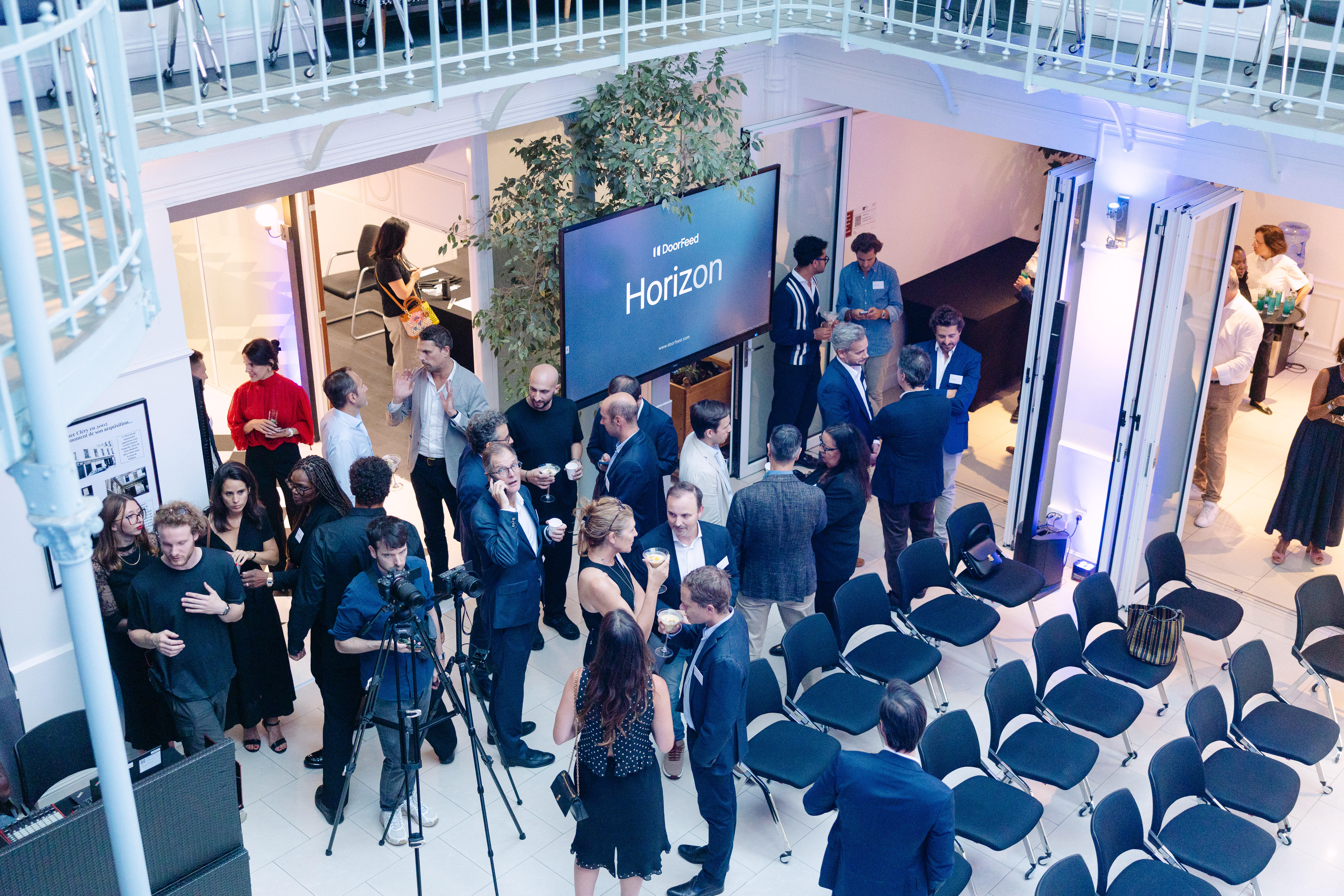
When the formal part wrapped up, the evening carried on over drinks and conversation at Espace Cléry, the panel's candour spilling straight into the talk on the floor.
Closing
For years, real estate has run on work that every team rebuilds alone. Horizon Paris was the night things began to change. The platform runs the work now, and the people keep the judgment.